Our Expertise > Replacing the Cherrylane Bridge
Crossing the Clearwater the Right Way
Project Highlights
- Replaced aging bridge with modern design
- 12 alternatives studied with 3D visuals
- Close work with County, Tribe, State, and Federal Agencies
- Secured $16.5M in funding
- Improved safety and protected the river
The Challenge
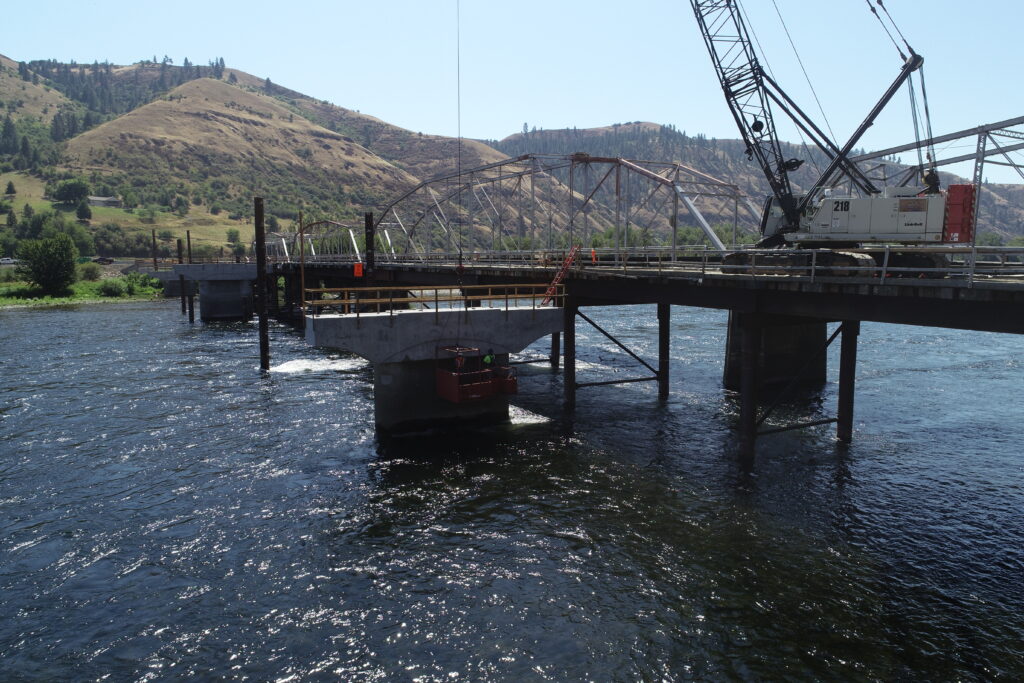
The Cherrylane Bridge spans the Clearwater River, one of the most environmentally significant river systems in the Pacific Northwest. But after 101 years of service, the 788-foot long, single-lane bridge reached the end of its life and no longer met modern safety standards or truck loading requirements.
Replacement wasn’t going to be easy. The Clearwater is critical habitat for salmon, steelhead, and bull trout. Spring runoff adds another layer of complexity, sending river flows five to 10 times higher than they are in late summer.
The Solution
Keller partnered with local, tribal, state, and federal agencies—as well as the railroad—to navigate a complex approval process and develop a path forward.
Using clear 3D visuals, stakeholders compared 12 crossing alternatives, helping them agree on a preferred solution. Keller applied for and won a $16.5M federal BUILD grant to fund the bridge final design and construction. The team worked closely with the Nez Perce County, Nez Perce Tribe, state agencies, and five federal agencies to gain approvals.
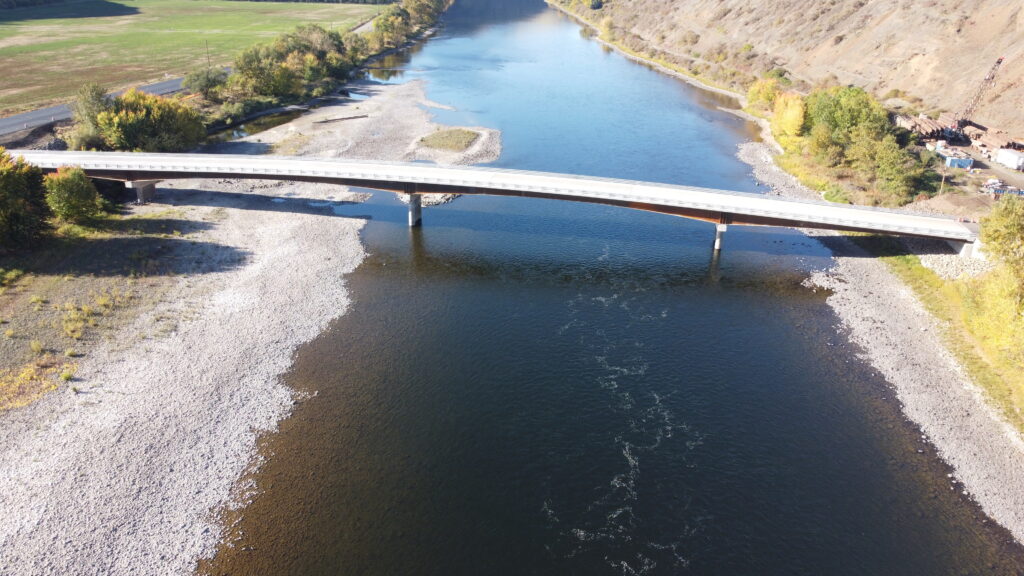
The final design widened US-12 to five lanes at the bridge approach and replaced the existing five-span steel truss bridge with a new 802-foot, four-span variable-depth steel arch bridge. It also met strict environmental requirements and maintained required clearances above river flows.
The Results
Keller successfully secured project funding and federal approval, turning a complex challenge into a buildable solution. The result is a future-ready Cherrylane Bridge. It improves safety on US-12, supports modern truck traffic, and enhances access to the north side of the river—while protecting the critical habitat it crosses.