
How a Boise hillside became home to one of the region’s most forward‑looking water projects.
“This is now the largest potable water tank in Idaho—and it fundamentally changes how far we can move water in our system.” – Russ Brooks, Engineering Manager, Veolia
Set within one of Boise’s fastest‑growing service areas, a massive new water tank now anchors critical expansion across the Treasure Valley. Built to support booming neighborhoods, airport growth, and major industrial development, the 6.8‑million‑gallon Columbia Tank No. 2 represents far more than added storage. It’s a milestone project that improves fire flow, elevates operational flexibility, and gives Veolia the ability to finally rehabilitate an aging tank that had been too essential to ever shut down.
A Two-Tank System Changes Everything
Paired hydraulically with an adjacent 3‑million‑gallon steel tank, the two structures function as nearly 10 million gallons of combined high‑elevation storage. This operational “one‑two punch” extends system reach from the airport and Gowen corridor all the way to Columbia Village, Micron, and even toward Harris Ranch under certain flow conditions.
Key Takeaways:
- Idaho’s largest potable water tank sets a new benchmark for regional water capacity.
- Nearly 10 million gallons of combined storage, delivering major gains in fire flow, pressure stability, and system reach.
- A landmark infrastructure upgrade built to support the Treasure Valley’s future.

Designed for Growth, Reliability, and the Next 100 Years
The decision to construct a prestressed concrete tank reflects a long-term, cost-effective approach. Concrete tanks of this scale don’t require recoating every 15–20 years like steel alternatives, so you can avoid millions in future maintenance costs. Not to mention the risk of taking such a critical asset offline for servicing.
“For a tank this large, concrete wasn’t just more durable—it was the most cost‑effective solution.”
– Brandon Keller, Structural Discipline Lead at Keller
The Columbia Tank also features dual 24‑inch bidirectional flow meters. This gives operators a granular, real‑time view of water movement between the Columbia Water Treatment Plant and west‑side wellfields. That level of visibility supports seasonal planning, fire‑flow readiness, and energy‑efficient operations.
And the project’s benefits are immediate. For the first time, Veolia can take the existing steel tank offline for overdue rehab without sacrificing pressure or reliability.
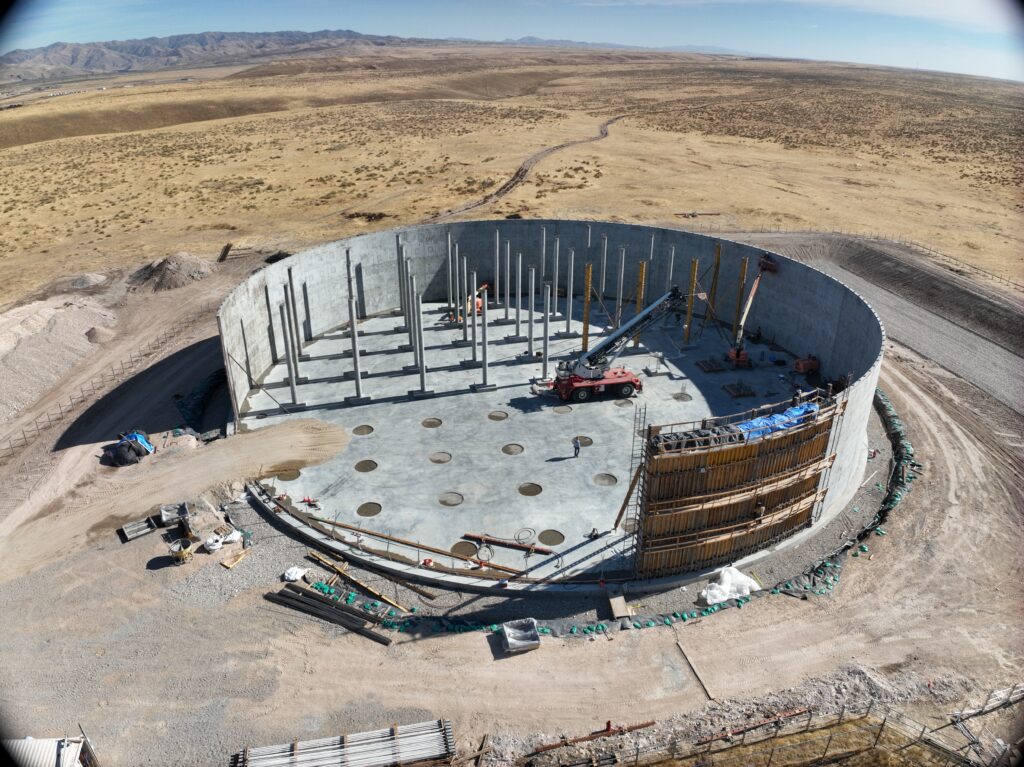
advancing toward final enclosure.
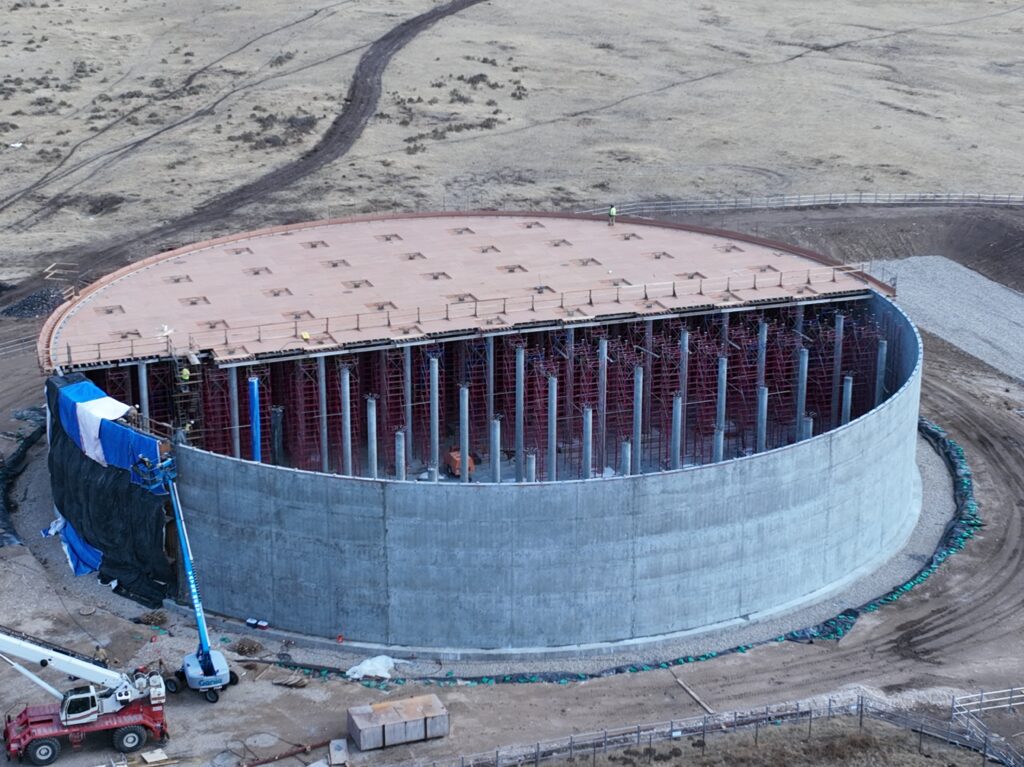
wall/roof interface and formwork.
Challenging Site, Exceptional Build
While the final tank appears like a clean, single presence on the ridge, getting to that point required a high level of effort. For starters, calling the access grade steep was an understatement. In addition, multi‑parcel easement needs and a long‑distance power extension were part of the mix, too. So the team redesigned access routes for construction, negotiated new right‑of‑ways, and coordinated with the airport on airspace clearances. There were a lot of cows up there, as well. And since they don’t have much respect for property lines, the team even built fencing durable enough to keep roaming cattle from wandering onto the construction pad.
Even with all the challenges, the structure surpassed expectations. The completed tank passed its full‑volume fill test with ZERO leaks. That’s an unheard-of achievement for a structure of this magnitude, and truly a testament to craftsmanship and construction. (Thank you, SKAAR!)
Built Steady, Built Strong, Built Local
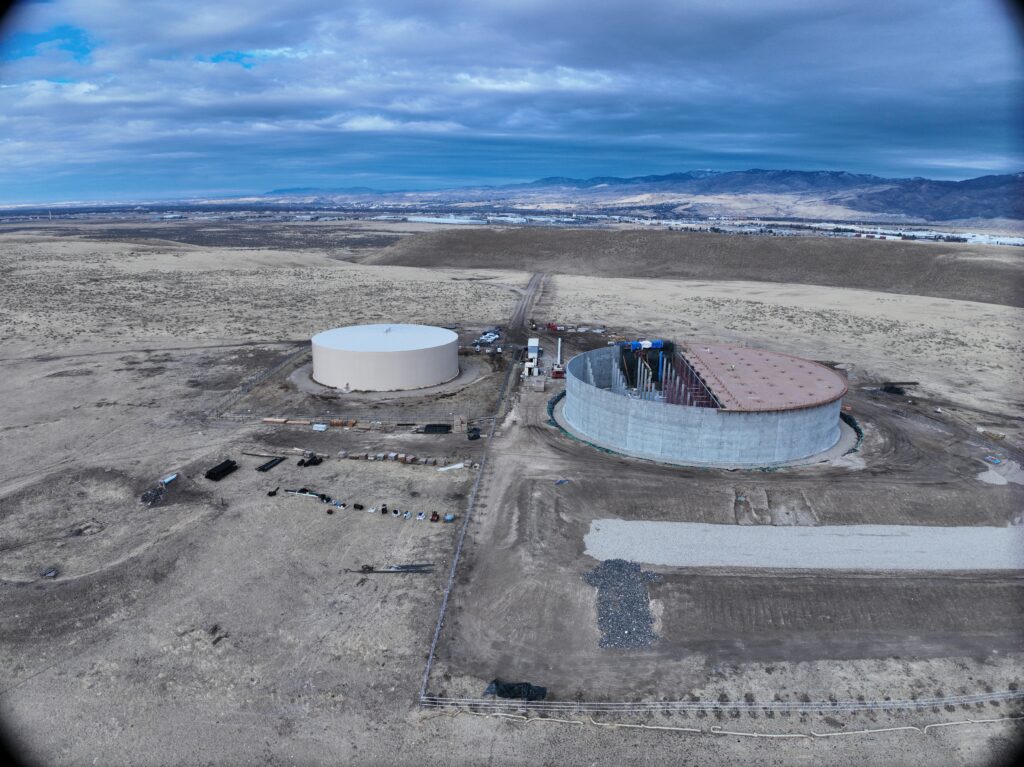
The Columbia Tank improves fire protection, stabilizes system pressures, elevates emergency resiliency, and supports energy‑efficient operations through deeper participation in Idaho Power’s Flex Peak program. Perhaps most importantly, it supports the region’s water infrastructure and keeps pace with Boise’s immense growth—protecting homes, businesses, and critical facilities for decades.
Sure, what rises over 10‑Mile Ridge today is Idaho’s largest potable water tank. But above all, it’s a long‑term investment in reliability, sustainability, and community well‑being. The Columbia Tank is a project built for now—and built for the next century.
We deliver projects that move local communities forward.
See more of what we’re building>